Study
Something that is suitable for serious occasions. Following rules and customs.
격식을 갖춘
 I find formal clothes really uncomfortable sometimes.
Correction Result
A person who is being interviewed.
면접 대상자
Most of the interviewees so far have been really promising.
Correction Result
Casual clothes that are made by knitting yarn.
니트웨어
Knitwear has become increasingly popular among young adults lately.
Correction Result
Clothes that are meant to be worn over top of other clothes to protect a person from rain or cold weather.
외투류
I need to buy some outerwear before the weather gets too cold.
Correction Result
Clothing or outfits, often ones that are worn for specific occasions.
복장
Business casual attire has become very common at many workplaces.
Correction Result
When something is used or thrown away carelessly. Causing something to be wasted.
낭비하는
Wasteful spending can cause serious financial issues.
Correction Result

What do you think about the Ministry of Personnel Management recommending that job seekers should not wear formal clothes for civil servant job interviews?
인사관리부가 구직자들에게 공무원 채용 면접 시 정장을 입지 말 것을 권고한 것에 대해 어떻게 생각하십니까?
· break with tradition (전통을 깨다)
· dress code policy (복장 규정)
· send the wrong message (잘못된 신호를 보내다)
Correction Result
How do you feel when you wear formal clothes? Do you often have to wear formal clothes at work or school?
정장을 입을 때 기분이 어떠신가요? 직장이나 학교에서 정장을 자주 입어야 하나요?
· feel restricted (제약을 느끼다)
· dress professionally (전문적으로 옷을 입다)
· suit and tie (정장과 넥타이)
Correction Result
What do you think about the trend of more workplaces embracing casual outfits? Is this a positive or negative trend?
점점 더 많은 직장에서 캐주얼 복장을 허용하는 추세에 대해 어떻게 생각하시나요? 이 추세는 긍정적인 것일까요, 아니면 부정적인 것일까요?
· shift toward casualness (캐주얼함으로의 전환)
· boost employee morale (직원 사기를 높이다)
· blur the line between (경계를 흐리게 하다)
Correction Result
What do you usually do to prepare for a job interview?
면접을 준비할 때 보통 어떻게 하시나요?
· research the company (회사를 조사하다)
· practice common questions (흔한 질문을 연습하다)
· make a good impression (좋은 인상을 주다)
Correction Result
What types of casual clothes do you like to wear? Do you often go shopping for new clothes?
어떤 종류의 캐주얼 옷을 입는 걸 좋아하시나요? 새 옷을 사러 자주 쇼핑하러 가시나요?
· comfortable and practical (편안하고 실용적이다)
· browse online stores (온라인 상점을 둘러보다)
· go window shopping (윈도우 쇼핑을 하다)
Correction Result
Do you think that wearing casual clothing during a job interview would help you feel more comfortable?
면접 때 캐주얼한 옷차림을 하면 더 편안한 기분을 느낄 수 있다고 생각하시나요?
· ease the tension (긴장을 완화하다)
· express my personality (내 개성을 표현하다)
· focus on the interview (면접에 집중하다)
Correction Result
Should students be allowed to wear casual clothes at school rather than uniforms? Why or why not?
학생들이 교복 대신 평상복을 입고 등교하는 것을 허용해야 할까요? 그 이유는 무엇인가요?
· promote equality (평등을 증진하다)
· maintain discipline (규율을 유지하다)
· sense of belonging (소속감)
Correction Result
What are the latest fashion trends in your country? Do you often follow fashion trends?
여러분의 나라에서는 요즘 어떤 패션 트렌드가 유행하고 있나요? 패션 트렌드를 자주 따르시나요?
· stay up-to-date (최신 유행을 따르다)
· catch on quickly (빠르게 유행하다)
· personal style (개인 스타일)
Correction Result
Have you ever wanted to become a civil servant? Is it common for people in your country to become civil servants?
공무원이 되고 싶다고 생각해 본 적이 있나요? 여러분이 사는 나라에서는 사람들이 공무원이 되는 것이 흔한 일인가요?
· job security (고용 안정성)
· competitive exam (경쟁 시험)
· pursue a career in (~에서 경력을 쌓다)
Correction Result
2. AI 서버의 문제, 회사의 사정 등 여러 이유로 AI 스터디 기능이 중지될 수 있으며, 언제든 AI 스터디 서비스가 종료될 수 있습니다.
3. AI 스터디의 교정문은 대체로 정확하나, 학습된 데이터로 결과물을 출력한다는 특성으로 인해 오류가 있는 교정문을 출력할 수 있습니다.
4. 유저가 입력한 문장과 교정문은 익명으로 AI 학습에 활용될 수 있으며, 다른 유저와 공유되어 학습자료로 활용될 수 있습니다. 민감한 개인정보를 입력하지 말아주세요.
5. AI 스터디의 목적에 부합하지 않는 내용을 입력하는 경우 AI 스터디 이용이 제한될 수 있습니다.
6. 욕설 혹은 타인을 비방하는 표현은 입력이 금지되며, 입력하는 경우 AI 스터디 이용이 제한될 수 있습니다.
마지막 업데이트: 2023/09/14
면접인데 정장 금지? 달라진 면접 복장 가이드
Government Advises Job Seekers to Wear Casual Clothes for Civil Servant Job Interviews


 Listen
 AI study
Read the article, and if you're not sure what it means, click the sentence to see the Korean translation!
The Korean translation is generated by AI and may contain errors. Please use it as a guide.
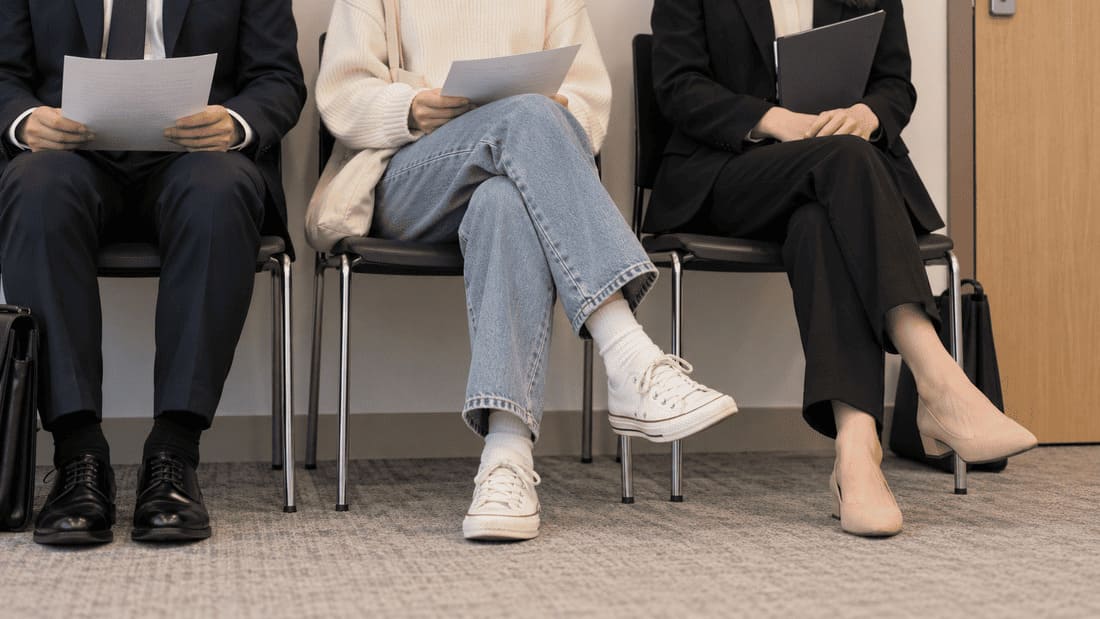
The Ministry of Personnel Management has recently announced that job seekers looking to become civil servants should avoid wearing formal clothes for their interviews. The ministry instead recommended that interviewees wear casual clothes. To show job seekers what they are expected to wear, the ministry produced several AI-generated example images for both men and women. These images show applicants wearing a variety of casual outfits that include jeans, sneakers, jackets, knitwear, and outerwear. Additionally, the ministry has stated that it will ban applicants from wearing ties and dress shoes.
The ministry said it made this change because “casual attire aims to reduce applicants’ financial and psychological burdens and help them perform more comfortably.” It also specifically banned dress shoes because of the loud noises they make. This announcement has drawn mixed reactions from people looking to become civil servants. Some online commenters were skeptical that the change would have a significant impact and believed that many applicants would still wear suits. However, some welcomed the change. One commenter stated, “I like that there is change. It was wasteful to buy a suit that I would only wear for job interviews.”
AI study
 를 눌러보세요!
Something that is suitable for serious occasions. Following rules and customs.
I find formal clothes really uncomfortable sometimes.A person who is being interviewed.
Most of the interviewees so far have been really promising.Casual clothes that are made by knitting yarn.
Knitwear has become increasingly popular among young adults lately.Clothes that are meant to be worn over top of other clothes to protect a person from rain or cold weather.
I need to buy some outerwear before the weather gets too cold.Clothing or outfits, often ones that are worn for specific occasions.
Business casual attire has become very common at many workplaces.When something is used or thrown away carelessly. Causing something to be wasted.
Wasteful spending can cause serious financial issues.
AI study
1. What types of casual clothes does the Ministry of Personnel Management want job applicants to wear?
인사관리부는 구직자들에게 어떤 종류의 캐주얼 복장을 착용하기를 바라는가?
2. Why did the ministry advise applicants not to wear formal clothes?
왜 해당 부처는 지원자들에게 정장을 입지 말라고 권고했나요?
3. Why did the ministry specifically ban applicants from wearing dress shoes?
해당 부처는 왜 지원자들에게 정장 구두 착용을 특별히 금지했나요?
AI study
를 눌러보세요!1. What do you think about the Ministry of Personnel Management recommending that job seekers should not wear formal clothes for civil servant job interviews?
인사관리부가 구직자들에게 공무원 채용 면접 시 정장을 입지 말 것을 권고한 것에 대해 어떻게 생각하십니까?
· break with tradition (전통을 깨다)
· dress code policy (복장 규정)
· send the wrong message (잘못된 신호를 보내다)
2. How do you feel when you wear formal clothes? Do you often have to wear formal clothes at work or school?
정장을 입을 때 기분이 어떠신가요? 직장이나 학교에서 정장을 자주 입어야 하나요?
· feel restricted (제약을 느끼다)
· dress professionally (전문적으로 옷을 입다)
· suit and tie (정장과 넥타이)
3. What do you think about the trend of more workplaces embracing casual outfits? Is this a positive or negative trend?
점점 더 많은 직장에서 캐주얼 복장을 허용하는 추세에 대해 어떻게 생각하시나요? 이 추세는 긍정적인 것일까요, 아니면 부정적인 것일까요?
· shift toward casualness (캐주얼함으로의 전환)
· boost employee morale (직원 사기를 높이다)
· blur the line between (경계를 흐리게 하다)
4. What do you usually do to prepare for a job interview?
면접을 준비할 때 보통 어떻게 하시나요?
· research the company (회사를 조사하다)
· practice common questions (흔한 질문을 연습하다)
· make a good impression (좋은 인상을 주다)
5. What types of casual clothes do you like to wear? Do you often go shopping for new clothes?
어떤 종류의 캐주얼 옷을 입는 걸 좋아하시나요? 새 옷을 사러 자주 쇼핑하러 가시나요?
· comfortable and practical (편안하고 실용적이다)
· browse online stores (온라인 상점을 둘러보다)
· go window shopping (윈도우 쇼핑을 하다)
6. Do you think that wearing casual clothing during a job interview would help you feel more comfortable?
면접 때 캐주얼한 옷차림을 하면 더 편안한 기분을 느낄 수 있다고 생각하시나요?
· ease the tension (긴장을 완화하다)
· express my personality (내 개성을 표현하다)
· focus on the interview (면접에 집중하다)
7. Should students be allowed to wear casual clothes at school rather than uniforms? Why or why not?
학생들이 교복 대신 평상복을 입고 등교하는 것을 허용해야 할까요? 그 이유는 무엇인가요?
· promote equality (평등을 증진하다)
· maintain discipline (규율을 유지하다)
· sense of belonging (소속감)
8. What are the latest fashion trends in your country? Do you often follow fashion trends?
여러분의 나라에서는 요즘 어떤 패션 트렌드가 유행하고 있나요? 패션 트렌드를 자주 따르시나요?
· stay up-to-date (최신 유행을 따르다)
· catch on quickly (빠르게 유행하다)
· personal style (개인 스타일)
9. Have you ever wanted to become a civil servant? Is it common for people in your country to become civil servants?
공무원이 되고 싶다고 생각해 본 적이 있나요? 여러분이 사는 나라에서는 사람들이 공무원이 되는 것이 흔한 일인가요?
· job security (고용 안정성)
· competitive exam (경쟁 시험)
· pursue a career in (~에서 경력을 쌓다)